


The transaction SAUNIT_CLIENT_SETUP enables administrators to permit or restrict the execution of ABAP Unit tests per client.
Unit testing is a standard technique in software development that allow automated functional tests. So called test classes exercise the domain code and deviations in the behavior are reported.
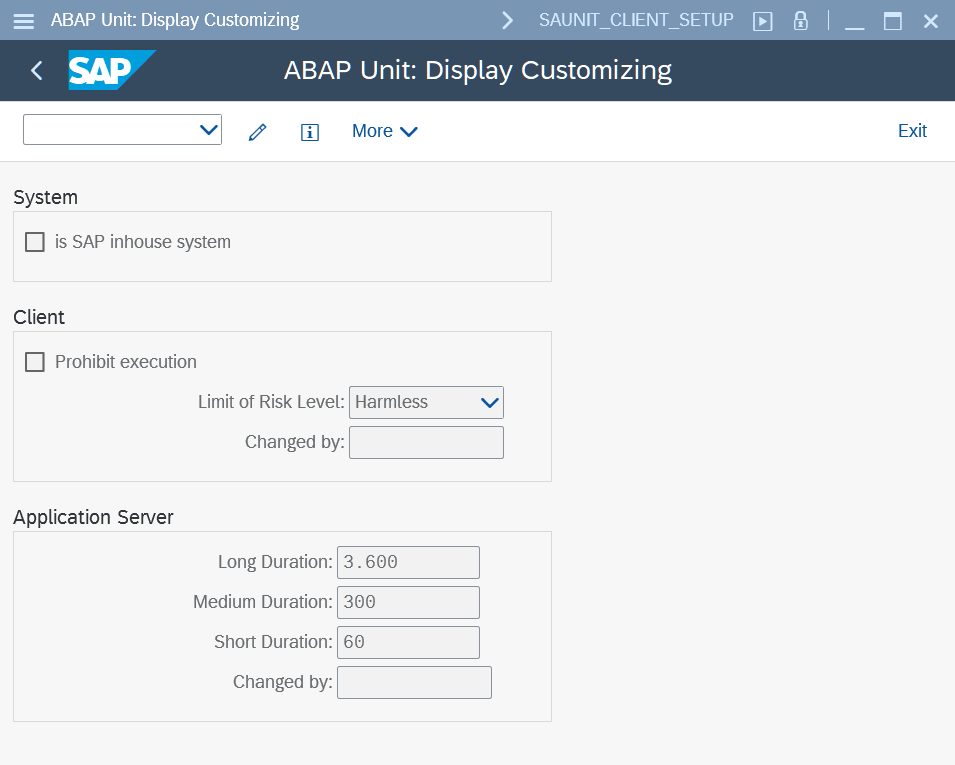
Ideally a unit testing has no side effects especially with regards to system stability. But even unit tests may have bugs. Therefore, tests authors can classify the risk a test may impose to the system. Test execution can get restricted by maximum allowed risk level. By means of transaction SAUNIT_CLIENT_SETUP administrators can set a restriction per client, or even forbid test execution at all.
Best practice is to allow unit testing in development systems and dedicated test systems while restrict test execution in systems with other use cases.
Note:
Test execution is disabled for productive and demo clients by an system internal default which cannot be overwritten manually.
Prerequisites
To alter this customizing authorization S_Q_ADM (quality tools administration) is required with the following assignments:
- Activity – Change
- Type – Configuration
- Visibility – Central


